Interesting facts about the Ruff fish, its habits and habitat

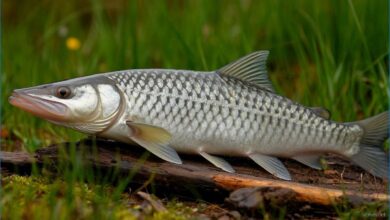
Jörsch attracts the attention of many aquarists due to its unique features. Its distinctive physical features, such as sharp spikes and elongated body, make it easily recognizable in the middle band of Russia. These fish prefer to inhabit cobbled rivers and rocky bottom lakes where they can hide from predators and hunt for their prey.
Content of the article:
The ideal water temperature for such fish ranges between 15-20 degrees Celsius, which makes them resistant to changes in the environment. They are usually active in the evening hours when they begin to hunt a variety of small organisms such as insects and crustaceans. They are also known for their territorial behavior, which makes them interesting to observe in the natural environment.
In the process of reproduction, the eagle exhibits a peculiar behavior, gathering in a stable. Males actively fight for the attention of females, demonstrating their strengths and changing color. Breeding occurs in the summer when the water temperature reaches its peak. It is important to note that the eagle has significant fertility, helping to maintain its abundance in reservoirs.
By knowing these interesting facts about eagles, you can better understand their behavior and adapt to their natural environment. Watching this fish brings pleasure and fascination to both experienced fishermen and beginners.
Fish Jorsh: peculiarities and habits of this freshwater fish
Yors prefer to live in sparsely populated reservoirs such as rivers and lakes with clean and running water. This fish actively chooses places with vegetation where it can find shelter from predators and a place to hunt.
Eats mainly animal food: it hunts larvae, crabs, worms and small fish. He spends most of his time in hiding, waiting for prey. However, the eagle is an active predator that hunts mainly at dusk and at night, making it an excellent hunter in low visibility conditions.
-
- The construction of the yarrow teeth allows you to quickly and effectively catch slippery fish. This quality makes them terrifying predators in their territories.
Yors can reach a length of up to 30 cm, but most often its size varies from 10 to 20 cm.

It is known for its prickly back fin, which serves as protection from potential predators.
Seasonal migration occurs in the spring months when the fish head to the spawning sites. This period is characterized by high activity of fish, which often attracts fishermen. The nests are built in shelters, and the males take care of the offspring, protecting the caviar from threats.
In interaction with other species, the eagle often acts as « Sanitary» aquarium, controlling small fish populations and ensuring a balanced aquarium ecosystem.
Area of_habitat_and_preferences_in_habitat_of_earthquake
Yors prefers fresh water with a low or medium flow rate. It is most often found in rivers, lakes and reservoirs, where there is a sufficient number of shelters. Among the usual habitats can be distinguished areas with stony or sandy bottom, as well as growths of aquatic vegetation.
This type of fish adapts well to different conditions. Yorch prefers areas with muddy water where it can easily hide from predators. It can often be found in cane growths and other aquatic plants where it finds food and shelter.
The water temperature for the comfortable habitat of the eagle is from 10 to 20 degrees Celsius. It feeds actively in the morning and evening, preferring shaded areas closer to the shore. During the spawning period, the eagle prefers areas with warmer water and good access to icrometation, which makes its migration to them another fact about its occasions.
The yorsh leads a sedentary lifestyle and does not make large migrations, usually staying within its usual range. However, its movements can vary depending on the season and water level, which affects the availability of food and shelter.
Ration_of_food_and_hunting_tactics_of_horse
Yors prefers a varied diet consisting of small fish, insects, crabs and worms. Adults hunt pearl and silverfish, while young perches are more likely to catch invertebrates. This creates optimal conditions for their growth and health.
Hunting strategies
Jörsch actively uses the environment for hunting. It often hides between algae and rocks, waiting for prey to pass by. Its characteristic spiky fins serve not only as protection, but also help in attacking inattentive victims. Shooting tactics include being at the bottom and sudden throws that allow you to capture the prey.
Period of activity
The most intense hunting occurs in the early morning and late evening, when light and temperature conditions are most favorable for active fishing. At this time, the eagle becomes particularly aggressive and hunts with maximum efficiency, making it a successful predator in its reservoir.
Seasonal_changes_in_the_behavior_and_reproduction_of_eagles
In the spring period, the eagle actively begins to reproduce. This usually happens from April to June, when the water temperature reaches 10-14 degrees Celsius. Males behave aggressively, actively showing their territoriality. They guard areas where females lay eggs, showing bright colors and characteristic movements.
Icra is deposited on vegetation, stones or other horizontal relief. It is cared for by both males and females, helping to protect it from enemies. Embryonic development lasts about two weeks, after which larvae appear from the cavity, which begin to actively feed on plankton.
The summer months are characterized by a change in the behavior of the eagle. Fish become less aggressive and hide more in shelters such as rocks or algae to avoid the heat and pressure of predators. At this time, the eagle changes its diet, adding to it more actively hunting creatures such as small fish and crustaceans.
In autumn, the migration of the herd is also manifested in habitat changes. Fish begin to move to deep-water areas where the water remains cool, which significantly affects their activity and diet. During this period, the eagle again becomes more active in the search for food after the summer nap.
The winter period does not stop the eagle, although its activity decreases. Fish swim deeper and slow down their eating behavior. However, the eagle continues to survive and mate, using any underwater shelter to protect against the cold. By storing energy, it prepares for the next breeding, which makes it resistant to changes in the environment.