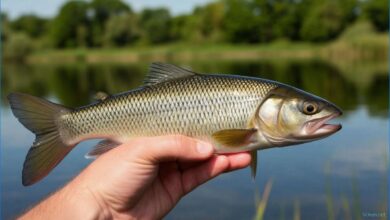
Pike as a valuable fishing object and its characteristics in its natural habitat

Shchuka is a predatory fish that is easy to recognize by its elongated body shape and sharp teeth. These characteristics make it an effective predator in the water bodies where it lives. The shrimp prefers medium and large bodies of water with sufficient shelter, such as pebble growths or underwater structures. Pay attention to the spring period when the pike becomes particularly active, which makes its catch the most successful.
Content of the article:
The pike’s body is flowable, allowing it to maneuver quickly and easily in the water. Depending on the habitat, its skin color varies from green to gray, with distinctive spots that help hide among the aquatic vegetation. This fish can reach significant sizes, exceeding 1.5 meters in length, making it a desirable trophy for fishermen.
This fish usually shows its activity in the morning and evening, which is ideal for fishing. When choosing bait, it is recommended to use a liver or glitter that mimics the movement of the injured fish, attracting the attention of the predator. Note that the pike prefers cold and clean water, so in contaminated bodies of water its number can be significantly reduced.
All about pike fish: its features and habitat
Behavior and nutrition features
Shchuka is a predator that prefers to lead an sedentary lifestyle. It hunts in various places, often waiting for prey in shelters such as roaches and stones. It is recommended to use baits that mimic the behavior of small fish to attract the attention of pikes. The most active period for catching pike is early morning and late evening.
Reproduction occurs in spring when the water temperature reaches 10-12 degrees Celsius.
Small pikes appear 10-14 days after spawning and grow fairly quickly, feeding on plankton.
An adult pike can reach a size of up to 1.5 meters and weigh more than 30 kilograms.

Environment
Shchuka prefers ponds, lakes and slow-flowing rivers. It often lives in the clusters of aquatic vegetation, where it hides and hunts. It feels great in warm and moderately heated waters with enough oxygen.
The best places to catch pike are areas with algae, shrimp and shallow water where it can hunt for its prey. A variety of natural shelters serve the pike as an effective way to hunt and protect against predators.
The study of the pike habitat allows to optimize fishing methods and better understand the behavior of this amazing fish.
Anatomical_and_behavioral_characteristics_of_pikes
Shchuka has a unique anatomy that makes her a nimble predator. His body is long and elongated, reaching a length of up to 1.5 meters. The jaws are equipped with sharp teeth, which allows the pike to keep prey. The dark color of the upper body with spots helps her to mask at the bottom of the reservoirs.
Body structure and adaptations
The weight of the pike can vary from 1 to 10 kg. The planes are arranged in such a way that they promote maneuverability and speed. The back fin is located closer to the tail, allowing the pike to quickly develop speed when attacking. The sight of the pike is developed, it is able to notice even a small movement in the water.
Shchuks prefer to live in algae clusters and near the coast. This allows them to sneak into the victim. In the thermal aspect, the pike is adapted to different environmental conditions, can choose places with different water temperatures.

Behavioral features
Shchuka is active mainly in the morning and evening hours. She hunts alone and prefers to wait for her victim, attacking from an ambush. This approach ensures her success in understanding, especially in the breeding season when the number of small fish increases.
During spawning, the pike becomes less aggressive and more vulnerable. During this period, they can gather in small groups, which increases the likelihood of being detected and caught by fishermen. Out of breeding season, the pike returns to its usual solitary lifestyle.
Shchuk exhibits territorial behavior, protecting its habitat. Sensitive to the surrounding conditions, pikes tend to occupy places with optimal conditions for hunting and shelter.
Where the pike lives: habitat preferences
Shchuka prefers a variety of bodies of water, including lakes, rivers and ponds. It lives actively in places where vegetation is present, as this provides it with shelter and places to hunt. Vegetation such as cane, algae and cauliflower creates ideal conditions for ambushes.
There are preferences for depth. It is often found in coastal areas at depths of up to 3 meters, especially during the warm season. In winter, it can be observed in greater numbers, up to 10 meters, especially under ice.
Water temperature also plays a role in pike preferences. She prefers warm water from 18 to 24 degrees Celsius. In colder or too warm conditions, the pike becomes less active and can avoid such places.
The streams and currents of the river are also of interest to pike. She can find refuge in the sinks and wanderings. It is important to keep in mind that the pike is more active during transitional periods, such as spring and autumn, when the water temperature changes.
In addition, the pike hunts for fish and other small organisms, which affects the choice of its habitat. In places with a high level of diversity of feed resources, such as glue or gills, pike shows great activity. Thus, studying bodies of water with a rich ecosystem will help to discover the habitats of this predatory fish.
Best_methods_of_catching_pike_for_fishermen
Technical wiring
Try different wiring techniques. Even wiring is suitable for active pike, while twitching can attract more passive individuals. Take pauses, allowing the lure « rest» This often causes predator aggression.
Choosing places to catch
Look for places with growths, roots and stones. Such areas provide the pike with cover for hunting. Morning and evening hours are the best time to hunt when the pike is actively looking for food. Use an echo to look for deep pits and reefs where fish can hide during the day.
Proper choice of equipment also plays an important role. Make sure your leash can withstand the tension, as the pike can be strong enough and resilient when fighting. Use thick ladders or special metal harnesses to avoid breakage.
Don’t forget about the weather. The tick is less active on too hot and sunny days. Cloudy skies and light rain can greatly increase your chances of success.
Combining all of the above, you will increase the likelihood of a successful catch of pike and get an excellent catch.