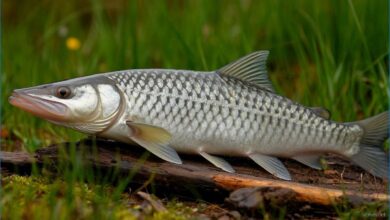
Interesting facts about burbot – its habits, food preferences and fishing methods

The fish lives in fresh water and is famous for its delicious meat. It is widespread in rivers and lakes where the bottom is covered with sand or clay. Nalim prefers depths from 2 to 10 meters. It actively hunts its prey at night, which makes its behavior particularly interesting for fishermen.
Content of the article:
Water temperature plays a significant role in the environment of the bulk. He prefers cold water with a temperature of 0 to 12 degrees Celsius. This species of fish becomes less active when the water temperature rises, which affects its habits and diet.
The tide can be found in rivers with a fast and slow flow. The best conditions for his life create areas with shrubs and flooded plants. These places provide shelter from predators and contribute to successful hunting. Assess the ability to capture such areas to increase the chances of successful catch.
Cargo and bait used to catch bulk must take into account its food preferences. Fish willingly eat small fish, crustaceans and worms. Successfully selected bait combined with the right fishing technique will allow you to enjoy the successful process of fishing for cash.
Anatomy and adaptation available to aquatic environment
Nalim has a unique anatomy that allows it to easily adapt to the conditions of the aquatic environment. Its body has a flowing shape, which reduces water resistance, making it easier to swim. The elongated body and long tail facilitate maneuverability in search of food and shelter.
The skin is covered with mucus that protects it from enemies and pathogens. The flour associated with the skin helps to retain moisture, which is especially useful when changing the water level or temperature. The lateral line, which has sensory cells, allows the fish to sense the smallest movements of the water, which serves to search for food and identify dangers.
The naked eye is adapted for hunting in low light conditions. They allow it to see well in muddy and dark water, making it an effective predator at night. Nalim prefers masking; its color gamut helps to merge with the bottom and environment, which protects it from predators.

The respiratory system allows the body to adapt to different types of water. It can breathe both through its gills and through its skin, giving it more chances of surviving in oxygen-depleted conditions. Nalim is able to find shelter in algae growths and among rocks, which makes it less vulnerable to predators and helps in the search for food.
Adaptation to cold waters is also a key aspect of cash survival. It has a slower metabolism at low temperatures, which allows it to save energy in winter belt conditions. This vigilant approach to resources makes cash a resilient inhabitant.
All these anatomical features and adaptations enhance Cash’s chances of success in a competitive environment, allowing it to occupy an important place in the ecosystem.
Distribution_available: where and how to catch
A great time to catch cash is autumn and winter. During this time, fish activity increases, especially at night. Use a quiet boat so as not to frighten the cash, otherwise it may go into hiding. It is also possible to catch cod from the shore, especially in regions with extensive shallow waters, where it approaches the shore in search of food.
Among the baits, fishermen often use live fish, especially small fish. Spinning lures such as wafers and silicone lures are also effective, especially in low light or in the dark during the day. When working with baits, pay attention to the activity available and choose the size and color depending on the conditions.
It is important to monitor water levels and seasonal changes. Nalim can change its location depending on the temperature of the water and the availability of food. Some fishermen recommend catching barley in places with weak currents where the fish feels safe and acts more actively.
Try catching cod in regions with known populations such as the Volga and Don rivers, as well as lakes and ponds in the northern regions of Russia. Each reservoir has its own peculiarities, so explore the area and consult with local fishermen to find out the best places to catch.
Effect of ecology on habitat availability
The availability depends greatly on environmental factors such as water quality, feed availability and sanitation. These factors determine how successfully this species reproduces and survives.
Water quality plays a key role. High levels of pollution, especially in places where wildlife breeds, can lead to declining populations. It is worth paying attention to such aspects as the oxygen content and the level of toxic substances. It is important to monitor the condition of water bodies. Clean, oxygen-saturated water promotes more successful reproduction and growth of young people.
The feed base also directly affects the amount of cash. Increased numbers of sturgeons, crabs and other food species provide higher survival rates. Maintaining an optimal ecosystem balance is desirable to maintain healthy population levels.
Regular monitoring of aquatic ecosystems.
-
- Limiting the release of pollutants.
Creation of protected areas for breeding is available.
Sanitary conditions in water bodies are also important. Spaces with high levels of man-made load, including construction and tourism, have a negative impact on the living conditions available. The presence of noise, changes in water flow and a decrease in natural vegetation can provoke the movement of fish and decrease in their numbers.
One of the recommendations for maintaining the population is active participation in the ecology of the area. The community can influence population growth by participating in river cleanup and conservation. Thus, maintaining the ecosystem will provide not only favorable conditions for the stock, but also a healthy environment for many other species.
Melbet bets on attracting new customers and retaining old users through various bonuses and promotions. New players